


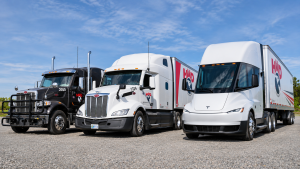
Tesla’s long-anticipated electric semi-truck is starting to make its way into more trucking fleets, and one Illinois carrier just became part of the action. HMD Trucking has officially received its first Tesla Semi, kicking off a 50-truck order as Tesla ramps up production of its electric Class 8 trucks ahead of a larger rollout in 2027.
According to a November 10 report from Drive Tesla Canada, Chicago-area carrier HMD Trucking took delivery of its first Tesla Semi on November 2, 2026. The company says it is the first Tesla Semi registered in Illinois, marking a milestone for electric trucking in the state.

The delivery comes as Tesla moves beyond its early testing programs and prepares to put more electric big rigs into commercial service across the country.
HMD Trucking Gets Its First Tesla Semi
HMD Trucking announced an order for 50 Tesla Semis in September, and the first truck has now arrived. As reported by Drive Tesla Canada, HMD had already spent time testing the electric truck over the summer. During that trial, the company operated the Semi for more than 4,000 miles and recorded average energy consumption of 1.74 kilowatt-hours per mile. Those results appear to have given the carrier confidence in the truck’s performance.
HMD Chief Operating Officer Michael Mahler told Drive Tesla that the company has nearly 15 years of experience with Tesla technology and believes the electric Semi can deliver on its promised capabilities. For now, HMD plans to use its first electric trucks primarily for local operations around Chicago. However, the company has also indicated that it eventually wants to expand their use well beyond the Chicagoland area. That could provide a valuable look at how electric Class 8 trucks perform in regular freight operations as more carriers begin adding them to their fleets.
Tesla Begins Volume Production in Nevada
HMD’s delivery comes at an important time for Tesla’s commercial trucking program. According to an October 21 report by FreightWaves, Tesla confirmed during its third-quarter earnings announcement that volume production of the Semi had begun at its Nevada manufacturing facility. The company reported an installed annual manufacturing capacity of 25,000 trucks at the plant. However, FreightWaves pointed out that this figure represents manufacturing capacity, not the number of trucks currently being produced.
Tesla has not publicly disclosed exactly how many Semis it manufactured or delivered during the quarter. The production milestone follows years of development, testing, and delays since the electric truck was first unveiled in 2017. Now, Tesla is preparing to expand deliveries to additional commercial fleets in the United States while also planning its entry into the European trucking market.

How Far Can the Tesla Semi Go?
One of the biggest questions surrounding electric semi-trucks has always been range. According to FreightWaves’ coverage of Tesla’s third-quarter earnings, Tesla says its long-range Semi can travel up to 500 miles on a charge while operating at a gross combination weight of 82,000 pounds. Tesla also claims the truck can achieve energy consumption of approximately 1.7 kilowatt-hours per mile. That figure is close to the 1.74 kilowatt-hours per mile HMD Trucking reported during its summer testing program.
Tesla CEO Elon Musk has argued that the Semi’s energy efficiency could offer operating cost advantages compared with traditional diesel trucks, particularly because energy represents a significant portion of a carrier’s cost per mile. However, actual operating savings will depend on several factors, including electricity prices, charging infrastructure, routes, payloads, and the cost of purchasing the truck. For trucking companies considering electric equipment, those real-world expenses will be just as important as the truck’s advertised range.

Bigger Plans for 2027
Tesla isn’t stopping with deliveries in the United States. FreightWaves reports that the company is also targeting its first European customer deliveries by the end of 2027.
Tesla Semi program leader Dan Priestley previously explained that the company intends to begin customer demonstrations in Europe during the first half of the year, with deliveries potentially following later in 2027.
The company has also outlined plans to install more than 100 Megacharger stalls across Europe in 2027, with charging capacity reaching up to 1.2 megawatts per stall.
These high-powered charging stations are an important part of Tesla’s plan to support electric heavy-duty trucks, particularly for carriers operating longer routes.
Meanwhile, Transport Topics reported in September that Tesla has discussed expanding its Nevada production capabilities to as many as 50,000 trucks annually.
That remains a production target rather than a confirmed annual output.
What Does This Mean for the Trucking Industry?
For now, diesel trucks still handle the vast majority of freight moving across American highways. But deliveries like HMD Trucking’s first Tesla Semi show that electric Class 8 trucks are moving beyond limited demonstrations and into additional commercial operations.
There are still plenty of questions surrounding the technology, especially when it comes to charging availability, purchase prices, long-haul routes, and how electric trucks perform over hundreds of thousands of miles.
HMD’s initial focus on local Chicago operations also highlights one of the areas where electric trucks may be easier to introduce, since carriers can plan routes and charging around established facilities.
As Tesla increases production and more carriers put these trucks to work, the industry should begin getting a clearer picture of their long-term reliability and operating costs.
One thing is certain: More Tesla Semis are heading into commercial service, and 2027 could be an important year for the electric trucking industry.