
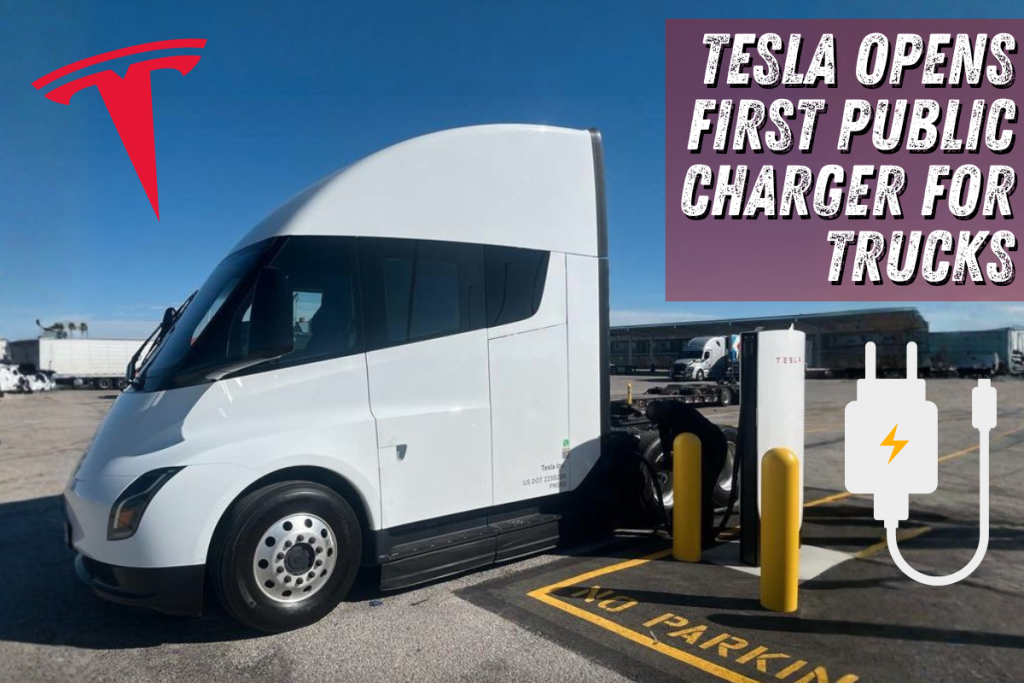
Electric trucks are slowly becoming a bigger part of the freight conversation, and Tesla just took another step toward making them practical on the road. According to cleantrucking.com, Tesla has opened its first public Megacharger station for the Tesla Semi, giving electric big rigs a place to top off outside of private fleet facilities.
A Megacharger is basically the heavy-duty version of Tesla’s Supercharger network, but built specifically for Class 8 electric trucks. Instead of the few hundred kilowatts you see with passenger EV chargers, these systems are designed to deliver megawatt-level DC fast charging so large battery trucks can get back on the road quickly.

Tesla says Megachargers can ultimately push up to about 1.2 megawatts of power, which could add roughly 400 miles of driving range in around 30 minutes under ideal conditions. That kind of speed is important because it can more easily line up with a driver’s typical rest break instead of forcing long charging stops.
For truckers curious about how electric charging compares to diesel fueling, here’s what the numbers look like in simple terms:

-
Charging Power: Up to 750 kW at this station (future Megachargers expected to exceed 1 megawatt)
-
Potential Range Added: Up to about 400 miles in 30 minutes
-
Charging Type: High-power DC fast charging
-
Designed For: Tesla Semi electric Class 8 trucks
At 750 kW, that’s dramatically more powerful than typical EV chargers. For comparison, many passenger EV chargers run around 150–350 kW.
First Megacharger station in Los Angeles ⚡️
Now open to Semi customers → https://t.co/epEVIYvusx pic.twitter.com/VNZDLiXXeq
— Tesla Semi (@tesla_semi) March 8, 2026
The new Megacharger site is located in Ontario, California, right in the heart of the Inland Empire freight hub. It sits close to the intersection of I-10 and I-15, which makes it a strategic spot for trucks running between the Ports of Los Angeles and Long Beach and inland distribution centers.
This station is only the beginning of Tesla’s larger Megacharger rollout. The company has mapped out dozens of additional locations across the U.S., with Texas and California leading the buildout. Key freight corridors like Interstate 5 along the West Coast and Interstate 10 across the Southwest are expected to be central routes for the network.
Tesla’s goal is to create a charging backbone that lets electric Semis run regular freight routes just like diesel trucks do today.
Read more Electric Trucking stories on The Mighty Trucker:
Original story by cleantrucking.com.