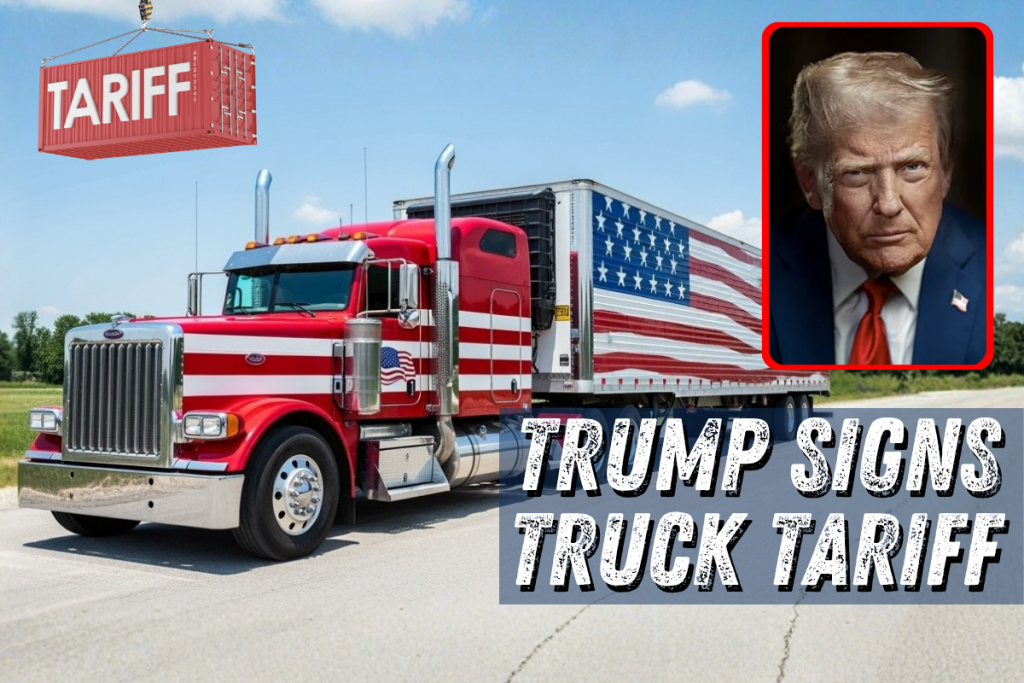
Trump Signs Tariff on Heavy-Duty Trucks and Parts!
The Trump administration has announced a sweeping new measure targeting heavy-duty truck parts, under national-security trade powers. According to the fact sheet released by the White House, the president invoked Trade Expansion Act of 1962 Section 232 to impose duties designed “to bolster American industry and protect national security.”
How the Tariffs Will Work
Effective under the proclamation, a 25 % tariff will apply to imports of medium- and heavy-duty trucks and truck parts, spanning Class 3 to Class 8 vehicles—including large pickups, dump trucks, tractors for 18-wheelers, and more. For “medium- and heavy-duty trucks that do not qualify for preferential tariff treatment under the United States–Mexico–Canada Agreement (USMCA), the tariff will apply to the full value of the vehicle.” For units that do qualify, the tariff applies only to the non-U.S. content.
Parts imports are covered too. The fact sheet notes: “The tariff on medium- and heavy-duty truck parts will apply to key parts, including engines, transmissions, tires, and chassis.” USMCA-compliant parts are initially exempt, pending a process to apply tariffs on non-U.S. content.

Additionally, the measure imposes a 10 % tariff on imported buses—including school buses and motor coaches. To support U.S. manufacturing, the proclamation establishes an offset program offering manufacturers a rebate of 3.75 % of sales value for trucks assembled domestically from 2025 through 2030. The intention: “incentiviz[e] domestic medium- and heavy-duty truck production,” says the fact sheet.
Why This Matters for Truckers & the Industry
The administration’s argument: trucks and buses are essential to national infrastructure, freight movement, and defense readiness. The fact sheet states: “Trucks and buses of all kinds… move over 70 % of the Nation’s freight, including essential goods like food, fuel, and medical supplies.” The investigation found that imported trucks and parts “threaten to impair the national security of the United States.”
For carriers, owner-operators, and fleet managers, the changes could eventually affect equipment acquisition costs, replacement vehicles, and supply-chain pricing—especially for imported vehicles or parts. At the same time, manufacturers of U.S.-assembled rigs may benefit from reduced import competition or offset credits.
The new tariffs on medium- and heavy-duty trucks, parts, and buses are set to reshape many segments of the trucking industry. The full implications remain to be seen, but drivers and fleets will want to factor these changes into cost planning, equipment sourcing, and trade-compliance strategies in the months ahead.
Read more on The Mighty Trucker:
Trucker Poll: Do You Support the English Language Mandate for CDL Drivers?
Original source: The White House